Eulogy for Gonzalo Ponce
One benefit of traveling as often as I have is being able to better understand those who come to the U.S. from all over the world. Because I have been to Bolivia and managed to run into some of the same people that Gonzalo knew there before he arrived in Boulder, Colorado to go to university, he and I got along pretty well. Today, as we celebrate his life, it’s impossible to do so without examining how his love of this uniquely spiritual land molded him into the man he became and guided the life he lived.
One of the world's most biologically diverse countries, Bolivia in many ways resembles the old American West, from its mountainous Andean cliffs - gruff, barren, cold, and foreboding; to the jungles of the lowland, vibrant with exotic birds and monkeys but also seething with piranhas and deadly snakes, and, because of its raw spirituality and vast mineral resources, infinite possibility. Had he known, John Wayne may well have come to Bolivia on vacation. So would legendary ornithologist John J. Audubon and the late Charles Kuralt of CBS News.
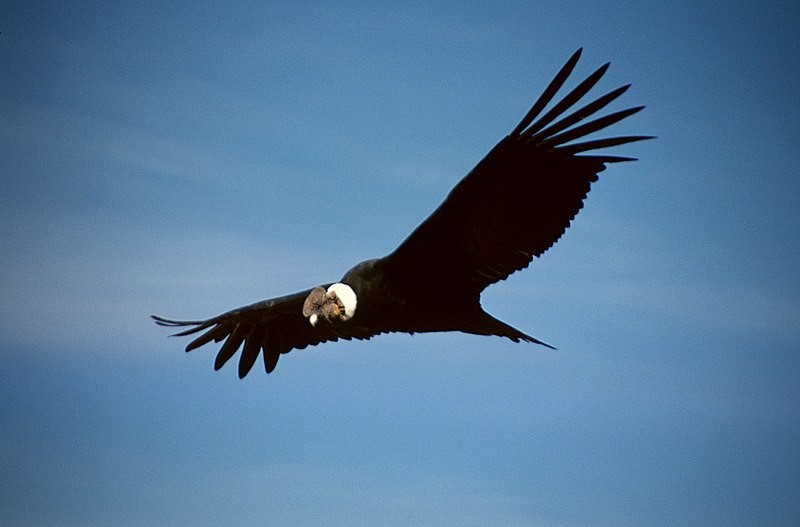
Gonzalo talked fondly and often about his native land, frequently mentioning Cochabamba, the city of his birth, and La Paz, the nation’s laid-back capital, at more than 13,000 feet, the world’s rooftop, so elevated that tourists frequently require oxygen masks while planes descend on takeoff. He spoke, too, about the remote jungles far below, where the vegetation is thick, the air is hot, and the population sparse; ideal for spotting majestic redheaded condors, their 10-foot wingspan fully extended as they ride the backs of air currents heavenward, as if in time to soulful pan pipes and flutes, seemingly never more than earshot away, playing El Condor Pasa, a mystical reminder of how our earthly limitations temper our lust for true freedom. This is fish bait for fortune seekers lured by the promise of potential wealth, but also for adventurers exploring the boundaries of raw spirituality.
While revisiting the country’s remote hinterlands during my second Bolivian trip, I severed my anterior cruciate ligament in a lowland jungle in the middle of nowhere, temporarily crippled and at the mercy of Indigenous people who attributed my injury to the anger of the Pachamama, their great godmother earth, displeased by my presence. To my surprise and great relief, humanity’s more benign spirits prevailed, and the Pachamama smiled down on me. Those same Bolivians, with the assistance of U.S. Ambassador Robert Gelbard mounted a daring helicopter rescue mission and plucked me from what seemed like certain death.
Despite this setback, I have remained fond of Bolivia, which I grew to revere as a treasured place in time rather than just a place; an adventure wonderland one step removed from the past without warning signs or guardrails, where danger often lurks and surprises seem to be around every corner. In his own understated way, Gonzalo exhibited the same gritty character of those I encountered as he climbed metaphorical mountains here in the U.S., fording the treacherous currents of an alien, asphalt jungle ultimately to distinguish himself both as a diplomat and translator who refused to dance with the devil.
Bolivia is roughly the size of Texas, dotted with so many mountains that if flattened with a gigantic iron it would probably rank as one of the world’s largest nations. Gonzalo’s death prompted me to return once more, this time in my imagination, nostalgically savoring the country’s wild frontiers; its impossibly narrow roads, its ancient ruins, and what is said to be the greatest concentration of cosmic rays on earth. In Bolivia, for every sheer cliff to climb, there are hundreds of orchids to view; for every valley to cross and stream to ford, there are scores of brilliantly colored butterflies and birds. Gonzalo left all of that behind when he came to the U.S. But, in a broader sense, it never left him, and guided every step of his journey here.
As we celebrate Gonzalo’s life today, I can only imagine him, no longer constrained by earth’s surly bonds, climbing those mountainous cliffs, fording those streams, relishing those brilliantly colored butterflies and birds; riding on the back of an Andean condor toward the heavens as the mystical strains of pipe pans and flutes waft upward while the Pachamama smiles down, and Gonzalo himself, in the words of the pilot-poet John Gillespie Magee, putting out his hand and touching the face of God.
Hasta siempre, mi amigo. Vaya Con Dios.