War Stories
(The Washington Times) — War can mean dramatically different things to different people. Most who read about it in newspapers or magazines or view battlefield footage on television get only the sanitized version, often summarized tidily by body counts presented much like the scores in sporting contests. Movies such as The Killing Fields and Pearl Harbor depict the horrors of warfare more graphically, but in their quest for artistic cohesiveness and bigger audiences tend to take liberties with the truth. Regardless, the lingering images often spark gleams in many a patriotic eye, producing a collective mindset conducive to hero worship and, eventually, the erection of monuments, usually to the genuinely praiseworthy, more often than not mounted in full battle regalia on fierce, rearing steeds. The most enduring of these images unquestionably include paintings of George Washington crossing the Delaware and George C. Scott’s gravelly-voiced Patton ruminating to his troops about the heroic exploits of the Carthagenians, accompanied by the lilt of background flutes. This is fodder for thought to legions of starry-eyed young men of the future eager to heed the romantic call of battle in the name of all that is good against a demonized enemy. An engagingly eccentric letter written by one Eric Channing-Renton to the editor of the Rhodesia Herald during fighting to topple white minority rule in the then breakaway British colony aptly sums up this mindset. Channing-Renton proudly proclaimed: "I would like nothing better than a rollicking good, fair fight — no pistol shooting — with these cowardly adversaries calling themselves terrorists."
Those who actually have lived through combat, who have heard bullets ping past their heads, who have gasped the sweet, sickly reek of battlefield death, find the experience both horrifying and exhilarating. There are highs from merely surviving a pitched battle. But these inevitably are tempered by stark reality. My own coverage of military developments in Asia and Africa, seeing brains split open like coconuts, watching victorious troops execute begging enemy soldiers who had been playing dead then stripping the bloodied corpses of valuables, forever dispelled the notion that there could possibly be anything commendable about grown men trying desperately to kill one another. Over time, the experience engendered thoughts about how little the human race actually has evolved. But it also left no doubt that flirting with death in the middle of a firefight, dancing a step ahead of the devil, can interject in our lives of silent desperation a kind of magic, potent enough to be either enormously exhilarating or, alternatively, psychosis inducing. Fodder, at least, for great novels.
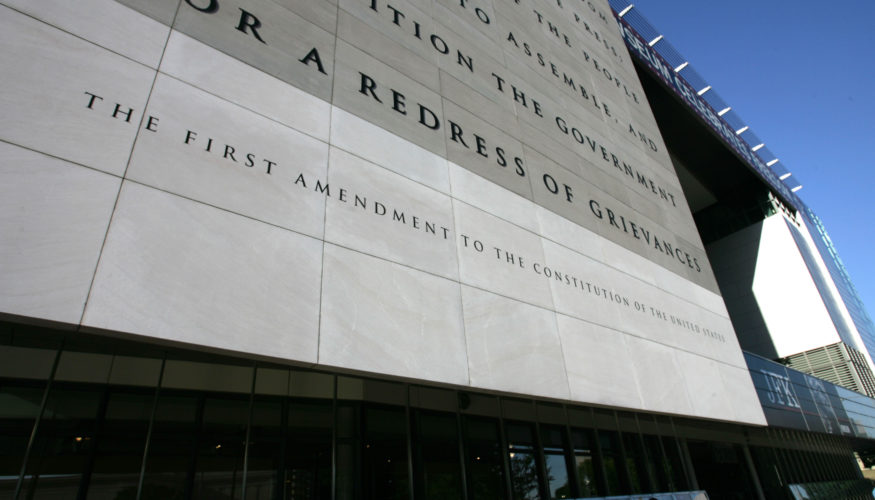
War Stories, at the Newseum through November 11, takes a more focused view. Using first person accounts, artifacts, historic newspaper front pages, photographs, newsreel footage, and radio and television broadcasts, the exhibit traces the history of war reporting from the Crimean War in 1853 to the present and the physical, psychological and professional challenges faced by more than three dozen print and broadcasts journalists. Ernest Hemingway figures prominently in the exhibition, along with other media stars of their day such as Edward R. Morrow, Ernie Pyle, Christiane Amanpour, Ted Koppel, Ed Bradley, Morley Safer and Dan Rather. But the exhibit also explores the work of lesser-known correspondents such as Dickey Chapelle, the earliest known female reporter to die in Vietnam, and Frank Bolden, one of the few African Americans accredited as a World War II correspondent. All were on a special quest. "There is no bigger story than the news of war," according to Newseum Executive Director and Senior Vice President Joe Urschel. "For the journalist trying to report the story, the job is fraught with danger, ethical conflicts, confusion and logistical nightmares." Witness the inner turmoil of Associated press photojournalist Eddie Adams while covering U.S. Marines in Vietnam:
"I was lying on the ground, facing me was a Marine who was about four feet away and he had fear on his face like I’ve never seen in my life. I slid my camera (out) and I couldn’t push the button. I tried three times and I couldn’t push the button. This would have been...one of the greatest pictures of the war — his face said it all. I know why I didn’t take it. I think about it a lot: Because my face looked exactly like his. I was just as frightened as he was and I didn’t want anyone taking a picture...because people would read it wrong. He wasn’t a coward. Everybody was frightened there...I think there are times when you just don’t take a photo."
War Stories also looks at the more mundane aspects of this depressing and dangerous business. It documents Hemingway’s professional competition with his wife, Martha Gellhorn, for example, and the human face that Ernie Pyle gave World War II through his reports about the daily routines of GIs. The display of artifacts — a piece of cruise missile from the Persian Gulf War, a stretcher used during the D-Day invasion on the beaches in Normandy, Winston Churchill’s original handwritten documents describing his adventures as a correspondent during the Boer War — help bring home the grim reality.
Mightier Than the Sword
The exhibit also examines how correspondents deal with the challenge of reporting the facts of war accurately, especially when doing so might negatively impact national patriotism or morale. Thoughtful combat reporters have agonized over this for more than a century, beginning with the first independent war correspondent, William Howard Russell, whose reports for the London Times about horrible conditions under which British soldiers served during the Crimean War helped force the resignation of the British prime minister. What is the public’s right to know? That depends. During World War II, correspondents almost always complied with military censorship out of patriotic duty. During the Vietnam conflict — often called the "uncensored war" — they reported carte blanche.