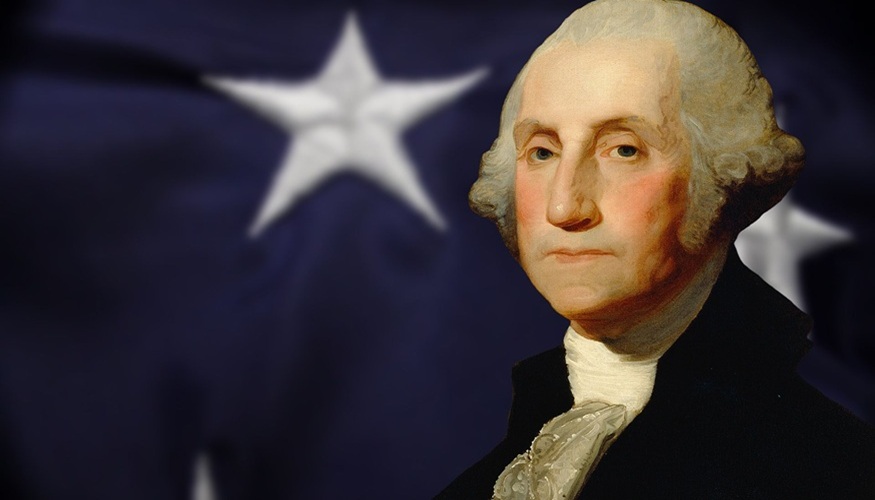
The Cumberland Crucible and the Making of Our First President
The history of Cumberland is inextricably bound to the life and legacy of George Washington. Long before it became known as the "Queen City of the Alleghenies" or the start of the National Road, this strategic confluence of Wills Creek and the Potomac River was the crucible in which Washington’s military career was forged. From his first tentative steps as a young major during the French and Indian War to his final review of troops as a sitting President 41 years later, the area that later became Cumberland was a vital thread that ran through Washington's life. It served as a geographic bookend to his public service, earning him the title of Father of Our Country. The recent film release, Young Washington, illuminates these pivotal decades, highlighting how the rugged terrain and military necessities of this frontier outpost shaped the character of our first leader and the nation itself.
The Early Years: Wills Creek and the French and Indian War
Washington’s connection to the region began in 1753, when he was just 21 years old. Tasked by Virginia’s Lieutenant Governor Robert Dinwiddie to deliver an ultimatum to French forces encroaching on the Ohio River Valley, Washington traveled through the settlement then known as Wills Creek on his first significant military assignment. This journey exposed him to the harsh realities of frontier diplomacy and the formidable logistical challenges of the Appalachian Mountains.
Despite his defeat at the Battle of Fort Necessity, Washington prepared for a massive push against Fort Duquesne (modern-day Pittsburgh) from Fort Cumberland, a formidable engineering feat for its time. This strategic stronghold served not only as a military launchpad but as a critical supply depot, storing enough flour, salt, and ammunition to sustain campaigns deep in the Ohio Valley. By then, Washington had risen to the rank of colonel, operating from his headquarters—a modest, single-room log cabin now housed in Riverside Park. Here, Washington managed supplies, coordinated with colonial governors, and advised his superior, Gen. William Braddock, on the necessity of widening Native American trails into a wagon-capable road. His counsel was instrumental in shaping the route of what would become Braddock’s Road, the first major military highway across the Alleghenies.
In 1755 at Fort Cumberland, Washington clashed with Captain John Dagworthy, who claimed superior rank based on an outdated royal commission despite commanding fewer troops. Washington’s resistance highlighted growing tensions between colonial authority and British imperial hierarchy, foreshadowing his later command challenges in the Revolutionary War.
The disaster of the Braddock Expedition in July 1755, which led to the death of Gen. Braddock and decimated British regulars, proved to be a defining moment for Washington. As one of the few officers who survived the ambush—despite having two horses shot from under him and four bullet holes in his coat—Washington led the ragged survivors back to the safety of Fort Cumberland. This experience taught him invaluable lessons about guerrilla warfare, the limitations of European tactics in the American wilderness, and the critical importance of logistics—lessons he would later apply to achieve victory in the Revolutionary War.
The President Returns: The Whiskey Rebellion
In October 1794, 41 years after he first stood on the banks of Wills Creek as a young colonial officer, Washington returned to the area as the first President of the United States to address the Whiskey Rebellion. This uprising in western Pennsylvania, fueled by federal excise taxes on distilled spirits, threatened the authority of the new national government and tested the Constitution’s viability.
After reviewing 5,000 militia troops assembled at Fort Cumberland, Washington led them on a campaign into western Pennsylvania, marking the first and only time a sitting U.S. President has led troops into the field.
His presence at Fort Cumberland made clear that armed insurrection in the new nation would not be tolerated.
The show of force collapsed the rebellion without a major battle, and Washington’s leadership cemented the precedent of federal supremacy. His return to the very site where his military career had begun linked the struggle for colonial survival with the preservation of the young republic.
A Vision for the West and the Birth of a City
Washington’s time in what later became Cumberland sharpened his military tactics and honed his vision for the nation’s expansion. He became convinced that the Potomac River Valley, accessible through Cumberland, was the natural gateway to the West. His advocacy laid the groundwork for future infrastructure projects such as the National Road, which began in Cumberland in 1811, and the Chesapeake and Ohio Canal, which reached the city in 1850, transforming it into the "Gateway to the West."
The National Road (legally the Cumberland Road), starting at Cumberland’s Greene Street, became the first major improved highway built by the federal government, enabling hundreds of thousands of settlers to reach the Midwest. Similarly, the arrival of the Chesapeake and Ohio Canal in 1850 solidified the city’s status as a bustling industrial hub, connecting the coal fields of the Alleghenies to the markets of Georgetown. Thanks to Washington, what had been a remote military outpost became an economic engine of Western Maryland with ambitions to become the gateway to the West. Officially established by the Maryland General Assembly in 1787 and incorporated as a city on January 23, 1815, Cumberland owes its existence and strategic prominence to the military necessities Washington identified decades earlier. The town expanded from the west side of Wills Creek, where Washington’s headquarters stood, to become a vital link between the eastern seaboard and the Ohio Valley.
The Enduring Legacy
Today, visitors can peer through the windows of the place where it all began: George Washington’s Headquarters Cabin in Riverside Park, the sole surviving structure associated with Fort Cumberland.
It was here that Washington faced his greatest defeat, learned the lessons of victory, and envisioned a united nation stretching to the Mississippi. As the film Young Washington brings these events to life, the city of Cumberland remains a living monument to the forging of American history, where the Father of Our Country learned to lead.